
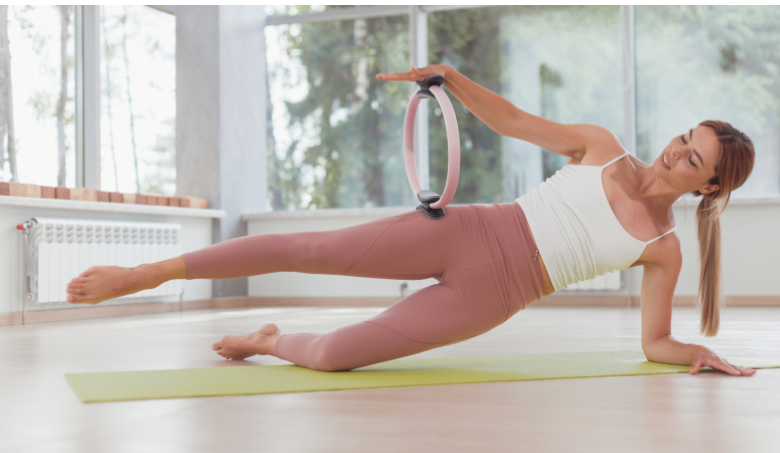
When considering Clinical Pilates, it is natural to want to understand how it differs from a general class, how frequently sessions may be needed and whether the benefits commonly associated with it are supported by research.
At MaterClinic in Charneca de Caparica, Pilates principles are incorporated into physiotherapy-led care. Clinical history, current symptoms, functional capacity, personal goals and the response to movement help guide exercise selection and progression.
Traditional and Clinical Pilates: what is the difference?
Traditional Pilates offers a structured form of exercise focused on breathing, movement control, mobility and muscular strength. It may be practised individually or in a group and can contribute to general fitness and wellbeing.
In a clinical setting, these principles are adapted following a physiotherapy assessment. Exercise selection, range of movement, resistance, intensity and progression are adjusted to the individual’s needs.
The programme may also change over time. An exercise that is appropriate at one stage may need to be adapted as symptoms, capacity or personal goals evolve.
What do we know about chronic low back pain?
Chronic non-specific low back pain is one of the most extensively studied areas in relation to Pilates.
A Cochrane review found low- to moderate-quality evidence that Pilates may help reduce pain and disability, particularly when compared with minimal intervention. When Pilates was compared with other forms of exercise, the available evidence did not show consistent superiority (Yamato et al., 2015).
Clinical Pilates may therefore be a suitable option within a broader care plan. The decision should take account of personal goals, preferences, exercise tolerance, the likelihood of maintaining the programme and the findings of the professional assessment.
How many sessions per week are appropriate?
The most appropriate frequency varies between individuals.
A clinical trial involving 222 people with chronic low back pain compared Pilates programmes performed once, twice or three times per week for six weeks. All three groups improved, with no difference in the speed of pain reduction between the different weekly frequencies (da Silva et al., 2020).
These findings do not establish a universal frequency. They indicate that more weekly sessions do not necessarily accelerate pain improvement in this particular population.
In practice, frequency should reflect the clinical situation, goals, availability, response to the programme and ability to participate consistently. One weekly session may be appropriate within some plans, while other circumstances may require a different arrangement.
Does greater intensity produce better results?
Intensity should also be progressed according to the individual’s response.
A trial published in 2025 compared high- and low-intensity Pilates in 168 adults with chronic non-specific low back pain. Both programmes were delivered twice weekly for six weeks and produced similar effects on pain and disability. Fewer adverse effects were reported in the low-intensity group (Coelho et al., 2025).
Intensity can therefore be developed gradually, taking account of movement quality, tolerance, symptoms and personal goals, while keeping the programme appropriately challenging.
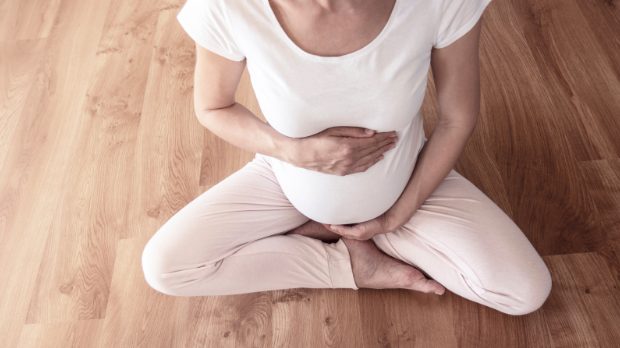
Pilates during pregnancy: what can we say?
Research into Pilates during pregnancy has produced encouraging findings, although important limitations remain.
Recent reviews have reported possible reductions in labour duration and pain intensity. A 2025 review involving 11 studies and 538 participants found no statistically significant change in mode of birth. Only three studies had a low risk of bias, while the remaining eight had an unclear risk (Li et al., 2025).
A separate 2024 review focusing on healthy, low-risk pregnant women reported a possible reduction in the active phase and overall duration of labour, without a clear effect on the length of the second stage (Haseli et al., 2024).
These findings can help inform practice, but they cannot predict an individual birth experience. The programmes included in the research also differed in their duration, frequency and choice of exercises.
During pregnancy, care should take account of gestational stage, symptoms, medical and obstetric history, and any contraindications to exercise.
Clinical Pilates at MaterClinic
Care begins with an assessment to understand the person’s current situation, establish goals and select an appropriate programme.
Exercises and progression are reviewed throughout the sessions in response to the individual’s experience. The aim is to develop mobility, strength, control and confidence in movement while respecting each person’s circumstances and pace.
If you are looking for Clinical Pilates in Charneca de Caparica, you can learn more about Clinical Pilates at MaterClinic and contact us to discuss whether this approach is appropriate for your goals.
This article is for general information and does not replace an individual assessment by a qualified healthcare professional.
References
Li Y, Lu H, Zhang L, et al. Pilates exercise in pregnancy: a systematic review and meta-analysis. BMC Sports Science, Medicine and Rehabilitation. 2025;17:20. https://doi.org/10.1186/s13102-025-01067-9
Yamato TP, Maher CG, Saragiotto BT, et al. Pilates for low back pain. Cochrane Database of Systematic Reviews. 2015;(7):CD010265. https://doi.org/10.1002/14651858.CD010265.pub2
da Silva ML, Miyamoto GC, Franco KFM, Franco YRS, Cabral CMN. Different weekly frequencies of Pilates did not accelerate pain improvement in patients with chronic low back pain. Brazilian Journal of Physical Therapy. 2020;24(3):287–292. https://doi.org/10.1016/j.bjpt.2019.05.001
Coelho ACS, Dourado JF, Lima POP. High-intensity and low-intensity Pilates have similar effects on pain and disability in people with chronic non-specific low back pain: a randomised trial. Journal of Physiotherapy. 2025;71(2):100–107. https://doi.org/10.1016/j.jphys.2025.03.002
Ghandali NY, Iravani M, Habibi A, Cheraghian B. The effectiveness of a Pilates exercise program during pregnancy on childbirth outcomes: a randomised controlled clinical trial. BMC Pregnancy and Childbirth. 2021;21:480. https://doi.org/10.1186/s12884-021-03922-2
Haseli A, Eghdampour F, Zarei H, Karimian Z, Rasoal D. Optimizing labor duration with pilates: evidence from a systematic review and meta-analysis of randomized controlled trials. BMC Pregnancy and Childbirth. 2024;24:573. https://doi.org/10.1186/s12884-024-06785-5